
From Lorentz to Artificial Intelligence

The Future of Condition Monitoring for Critical Electromechanical Machines.

Eric van der Hooft – Senior Specialist, Electrical Powertrain
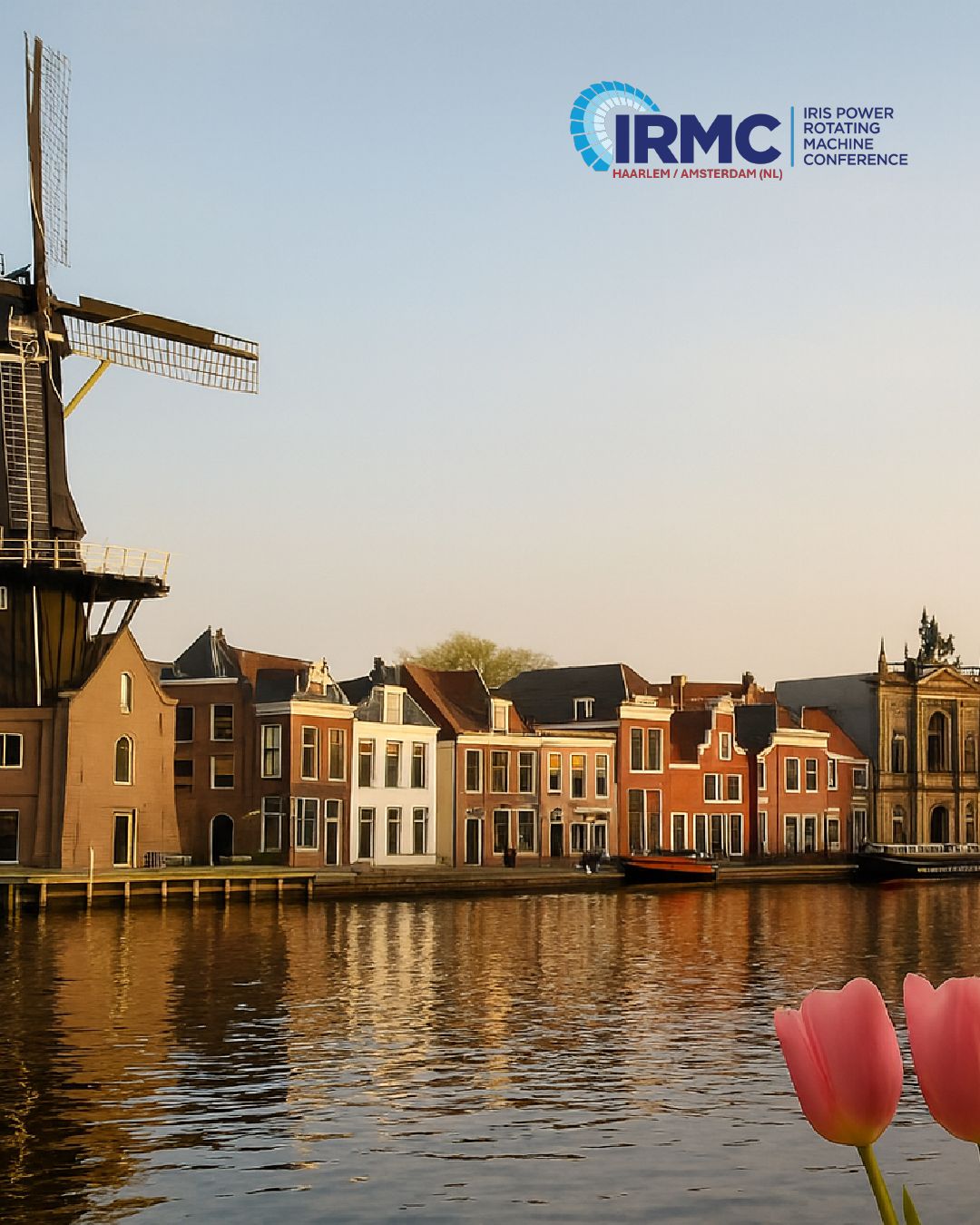
 

How do you determine the future of a machine that has been in operation for decades?
Asset owners around the world face the same challenge. Large generators and high-voltage motors are aging, while demands for reliability, availability, and security of supply continue to rise. Replacement is costly, involves long lead times, and is often not a realistic option. Therefore, maintenance policies are increasingly based not on a machine’s age, but on its actual condition.

That is precisely why SPIT with IRIS Power, organized the international IRMC Europe 2026conference in Haarlem this spring. Over the course of three days, specialists from more than twenty countries gathered to discuss the latest developments in condition monitoring and lifespan management of large generators and high-voltage motors.

Reliability is a strategic issue
The fact that this issue is more relevant than ever was also evident from the discussion surrounding the large-scale power outage in Spain in 2025. Although the exact causes are still under investigation, this incident once again underscored how dependent our society is on a robust and reliable electricity infrastructure.
The reliability of critical electromechanical assets is therefore not only a technical issue, but also an economic and social responsibility.
From Measurement to Prediction
During IRMC Europe, the focus was on topics such as online and offline partial discharge measurements, acoustic diagnostics, robotic inspections, advanced vibration analysis, and new methods for condition-based maintenance. The common thread was clear: better data leads to better maintenance decisions.
Artificial Intelligence is also playing an increasingly important role in this area. One of the highlights was the presentation by Greg Stone, one of the world’s most renowned experts in the field of high-voltage insulation and partial discharge diagnostics. He demonstrated that AI can be a valuable tool in analyzing large amounts of measurement data. 

At the same time, he emphasized that interpreting partial discharge signals in rotating electrical machines continues to require specialized knowledge. Unlike with transformers or GIS installations, there is a wide variety of discharge mechanisms, and well-validated datasets are still limited. AI will therefore not replace the specialist, but will provide increasingly better support.

Jürgen Weidner’s presentation also tied in seamlessly with this. He outlined the implications of the energy transition for existing power generation units and made it clear that replacing large generators is often barely feasible from a technical, economic, and logistical standpoint. Extending the service life of existing assets in a responsible manner will therefore be one of the most important challenges for the coming decades.

From Conference to Practice
The developments discussed at IRMC Europe are no longer just a vision of the future. At SPIT , we SPIT this knowledge every day in power plants, among grid operators, and in energy-intensive industries.
Our specialists perform condition monitoring and diagnostic inspections on large generators and high-voltage motors, combining modern diagnostic techniques with in-depth practical experience.
We recently worked on generators at one of the largest power plants in Northwest Europe—facilities that collectively generate electricity for millions of households and businesses. With assets like these, making the right maintenance decisions is what makes the difference between planned availability and unplanned downtime.
The greatest value of modern condition monitoring, therefore, lies not in performing more maintenance, but rather in making better decisions. By providing insight into a machine’s actual condition, maintenance and investments can be planned based on facts rather than assumptions. This increases availability, prevents unnecessary costs, and minimizes the risk of unplanned downtime.
Why Lorentz Is Still Relevant Today
Perhaps the most remarkable part of the conference took place outside the conference venue. In the historic Lorentz Hall at the Teylers Museum, attendees reflected on the work of Hendrik Antoon Lorentz, whose research into electromagnetism laid the foundation for modern electrical engineering.
It is precisely the connection between electrical engineering and mechanics that makes the field of large generators and high-voltage motors so special.
The condition of these machines is never determined solely by electrical insulation or mechanical design alone. Electrical, mechanical, thermal, and magnetic phenomena continuously influence one another. Reliable condition monitoring therefore requires a comprehensive approach that brings these disciplines together.
It therefore felt particularly fitting that the discussion about the future of electromechanical machines took place in the Lorentz Hall.
The Future of Fitness Testing
IRMC Europe 2026 demonstrated that the future of our field lies in the combination of in-depth technical knowledge, high-quality diagnostics, data analysis, and the responsible use of artificial intelligence.
Technology will continue to evolve. But ultimately, one thing remains the same: reliable maintenance decisions start with understanding the machine behind the measurement data.


Because the biggest problem is often not the one that arises today, but the one whose first signs were already present years earlier without being recognized in time.


Contact

Want to know more?

We would love to hear how we can help you with energy efficiency services. With our experience and our extensive workshop, we can help you in the way that suits your business.